Do I really need to remove that tree? Can't we just trim it?
This is probably the first thing folks ask me. Sometimes, yeah, a good trim is all you need. But there are plenty of times when removal is the only safe or practical option. If a tree's got extensive disease, like that nasty Black Knot we sometimes see on cherry trees around the Rattlesnake neighborhood, or if it's infested with pests that are beyond saving, it's gotta go. Same goes for trees that are structurally unsound – maybe it's got huge cracks in the trunk, major storm damage, or it's leaning precariously towards your house or power lines. Sometimes, a tree is just too big for its space, causing problems with foundations, driveways, or blocking too much sun from your garden. We'll always assess it honestly and tell you if a trim could work, but if it's a hazard or beyond repair, removal is the way to go.
How much does tree removal cost in Missoula?
Ah, the million-dollar question, right? And it's never a simple answer because every tree and every job is different. The cost depends on a few big factors. First, the size of the tree – a small ornamental tree is obviously less work than a towering Ponderosa Pine. Then there's its location. Is it in an open yard with easy access for our equipment, or is it wedged between your garage and your neighbor's fence, requiring careful rigging and manual labor? Are there power lines nearby? Is it dead or alive? Dead trees can be more unpredictable and dangerous to remove. Finally, what about stump grinding? That's usually an extra service. For a typical residential tree in Missoula, you're generally looking at a few hundred to a couple thousand dollars, but we always give a free, no-obligation estimate so you know exactly what you're getting into. Don't just go with the cheapest guy; make sure they're insured and know what they're doing.
Do I need a permit to remove a tree in Missoula?
This is a good one to ask, and the answer can be a little nuanced. For most trees on private property, you generally don't need a permit from the City of Missoula. However, there are exceptions. If the tree is in the public right-of-way (like between the sidewalk and the street), or if it's a significant tree on a property undergoing development, you might need one. Also, if your property falls under a specific zoning overlay or a homeowner's association, they might have their own rules. My advice? If you're unsure, it's always best to check with the City of Missoula's Development Services or your HOA. It's better to make a quick call than to face fines later. We can help you figure out if a permit is likely needed when we do our assessment.
What's the best time of year to remove a tree?
Honestly, you can remove a tree any time of year if it's necessary, especially if it's a hazard. But if you have the luxury of planning, there are a few things to consider. In winter, when deciduous trees have lost their leaves, it can be easier to see the tree's structure and access it. The ground is also often frozen, which can reduce compaction and damage to your lawn from heavy equipment. However, Missoula winters can be brutal, and heavy snow or ice can make conditions tricky and dangerous for our crews. In the spring and summer, trees are in full leaf, which means more debris to clean up, but the weather is generally more cooperative. Fall is often a good compromise – leaves are falling, and the ground is usually still soft enough for easy work but not too muddy. Ultimately, safety and necessity dictate the timing more than anything else.
What happens to the wood and debris after the tree is removed?
When you hire us, Tree Service Pros of Missoula, we handle the whole shebang. We'll cut down the tree, chip up all the branches and smaller woody debris, and haul it away. We leave your property clean, often cleaner than we found it! For the larger logs, you usually have a few options. Some homeowners like to keep the logs for firewood, especially with our cold Missoula winters. If you want to keep them, we can cut them into manageable lengths for you. Otherwise, we'll haul those away too. We try to recycle as much as possible, sending chips to local landscaping projects and logs to mills or for firewood. We'll discuss all these options with you during the estimate so there are no surprises.
Will removing the tree damage my yard or landscaping?
Our goal is always to minimize impact on your property. Tree removal, especially for large trees, is a big job, and sometimes there's an unavoidable amount of disturbance. However, professional tree services like ours use specialized equipment and techniques to protect your home, lawn, and landscaping as much as possible. We use ground protection mats, careful rigging, and precise cutting to control where limbs and sections of the tree fall. We're also meticulous about cleanup. While there might be some temporary divots in your lawn from equipment or falling debris, we do our best to leave your property looking as good as we found it. We'll discuss any potential risks or necessary precautions with you beforehand so you know what to expect.
What about the stump? Should I have it removed?
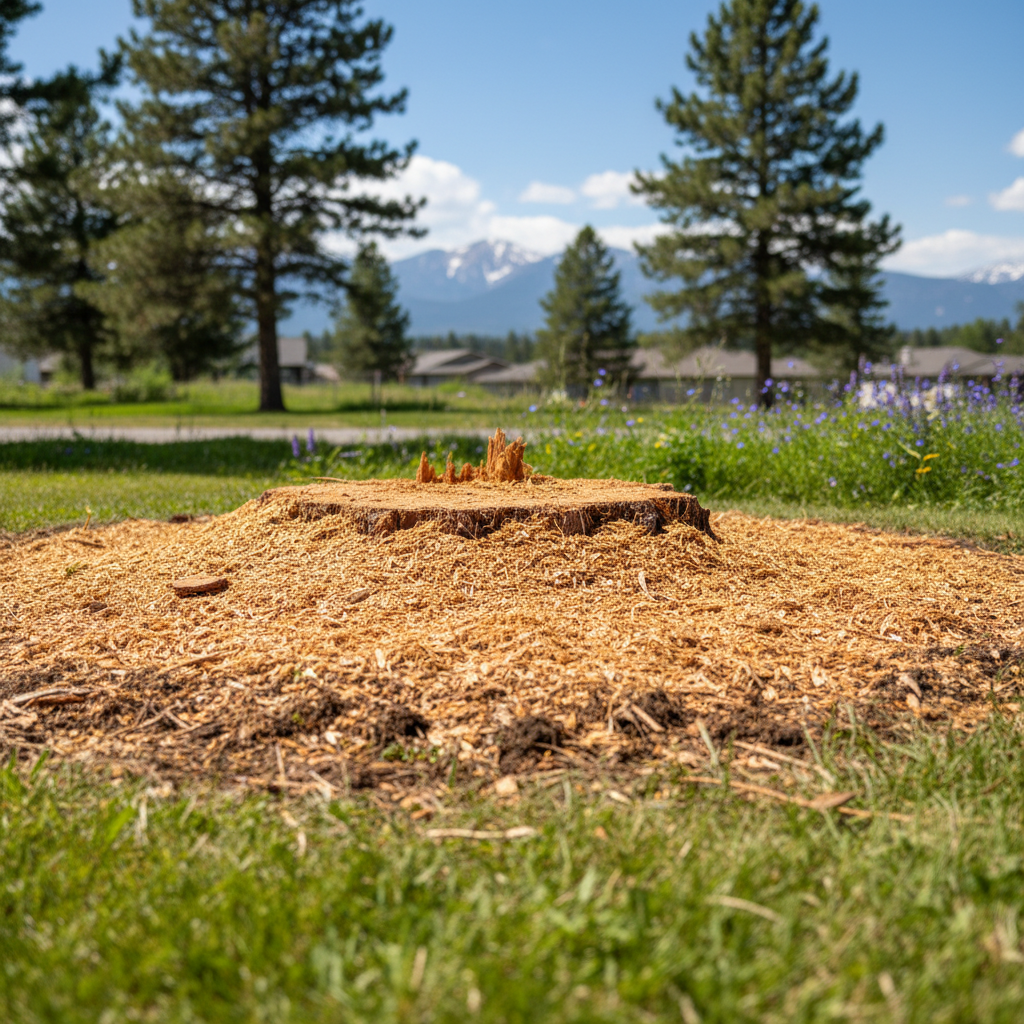
After a tree is cut down, you're left with a stump. Whether you remove it or not is really up to you. If you plan to replant in the same spot, put in a garden bed, or just want a clean, level lawn, then stump grinding is definitely the way to go. It removes the stump below ground level, usually 6-12 inches, so you can plant grass or new shrubs right over it. If you leave the stump, it can become a tripping hazard, an eyesore, and even attract pests like carpenter ants or termites to your yard. Plus, it can continue to sprout new growth, which you'll have to keep cutting back. Some folks like to turn them into natural planters or garden features, which is fine, but for most, grinding is the best option for a clean slate. It's usually an additional service, and we'll quote that separately for you.